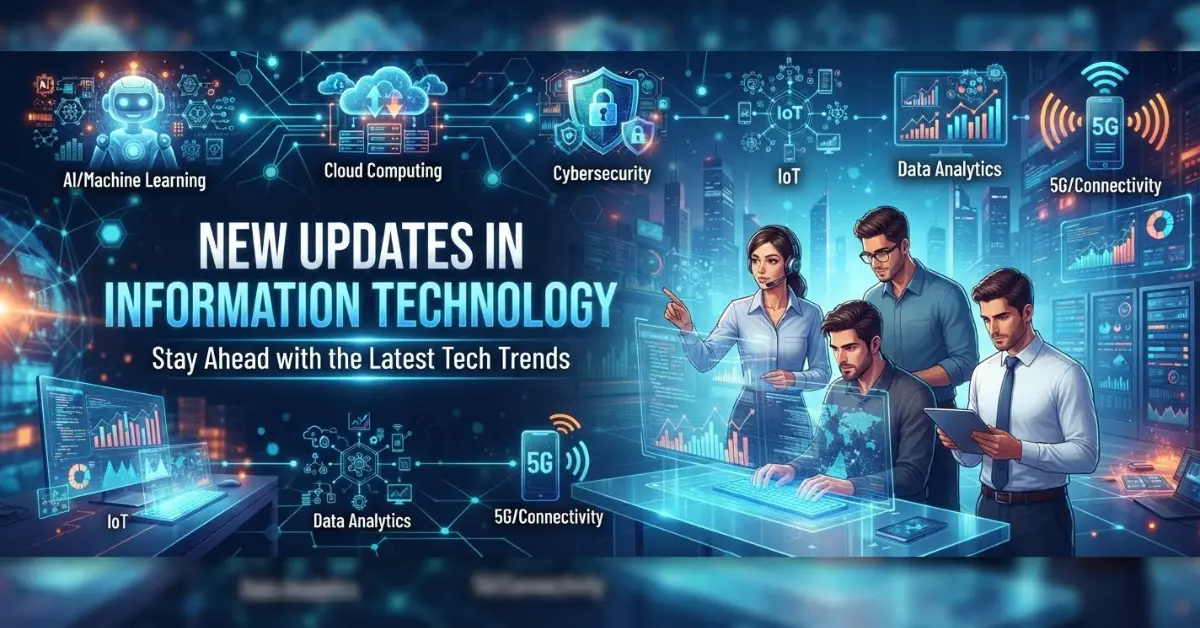
Information technology is changing quickly and bringing new tools and ideas into our daily lives. From artificial intelligence and cloud computing to cybersecurity and smart devices, technology is making work, learning, and communication easier. Understanding the new updates in information technology can help students, businesses, and everyday users stay informed and ready for the future.
What Are the New Updates in Information Technology?
The new updates in information technology are making digital tools faster, smarter, and easier to use. Today, IT is growing in many areas, from smart software to better online services.
- Artificial Intelligence: AI is being used to help with writing, research, customer service, and other tasks.
- Cloud Technology: Cloud services make it easier to store files and use software online.
- Smart Devices: More everyday devices can now connect to the internet and share information.
- Better Online Security: New security methods help protect accounts, systems, and personal information.
- Automation: Software can now handle many routine tasks with less human effort.
- Advanced Networks: Faster and more reliable networks support modern apps and connected devices.
These updates are making IT more useful in everyday life, education, business, and many other fields.
How Artificial Intelligence Is Changing IT
AI is changing IT by making computers smarter and helping people complete tasks faster and easier.
- Automates tasks: AI handles repetitive work.
- Improves software: It helps developers write and test code.
- Analyzes data: AI finds useful information quickly.
- Boosts security: It helps detect cyber threats.
- Supports users: AI chatbots provide quick answers.
- Saves time: AI makes many IT tasks faster.
AI is making information technology smarter, faster, and more efficient.
The Growth of Cloud and Edge Computing
Cloud and edge computing are changing how data is stored, processed, and accessed. They help businesses and users get faster and more flexible digital services.
- Cloud Computing: Stores data and runs services through the internet.
- Easy Access: Users can access files and apps from different devices.
- Edge Computing: Processes data closer to where it is created.
- Faster Response: Edge computing can reduce delays in connected devices.
- Supports AI and IoT: Both technologies help smart devices and AI systems work efficiently.
- Better Flexibility: Businesses can quickly increase or reduce their computing resources.
Cloud and edge computing are making modern IT faster, more flexible, and more efficient.
New Developments in Cybersecurity
Cybersecurity is improving as online threats become more advanced. New tools are helping protect data, devices, and online accounts.
- AI Threat Detection: AI helps find unusual activity and possible attacks.
- Stronger Authentication: Multi factor authentication adds extra protection.
- Better Data Protection: New security tools help keep private data safe.
- Faster Threat Response: Security systems can detect and respond to threats quickly.
- Cloud Security: Better tools protect data and applications stored in the cloud.
- Regular Security Updates: Updated software helps fix security weaknesses.
New cybersecurity technologies are making digital systems safer and more reliable.
The Role of 5G in Modern Technology
5G is improving mobile networks by offering faster speeds, lower delays and better connections for modern devices.
- Faster Internet: 5G provides faster data speeds for users.
- Low Latency: It helps devices communicate with less delay.
- Supports IoT: 5G connects smart devices more efficiently.
- Better Streaming: It makes video calls and online streaming smoother.
- Smart Technology: 5G supports smart homes, cars, and cities.
- Supports New Services: It helps businesses develop faster and more connected digital services.
5G is helping create faster, smarter, and more connected technology.
How Automation Is Changing Work
Automation is changing workplaces by using technology to complete tasks faster and with less human effort.
- Saves Time: Automated systems can complete repetitive tasks quickly.
- Reduces Errors: Machines can perform many tasks with consistent results.
- Improves Productivity: Workers can focus on more important and creative work.
- Supports Businesses: Automation can make daily business processes easier.
- Creates New Skills: Workers need to learn new digital and technical skills.
- Changes Jobs: Some routine tasks may be automated, while new technology-related jobs can grow.
Automation is making work faster and more efficient while creating new opportunities and skills.
What Students Should Learn About Modern IT
Students should learn basic technology skills to understand and use modern IT effectively. These skills can also help them prepare for future jobs.
- Artificial Intelligence: Learn how AI works and how to use AI tools responsibly.
- Cybersecurity: Understand online safety, strong passwords, and data protection.
- Cloud Computing: Learn how cloud services store and manage information.
- Basic Coding: Learn simple programming concepts and problem solving.
- Data Skills: Understand how to collect, read, and use data.
- Digital Skills: Become comfortable with computers, software, and online tools.
- Continuous Learning: Keep learning as technology continues to change.
These skills can help students become confident technology users and prepare for the digital future.
Common FAQs About New Updates in Information Technology
Here are some Faqs of New Updates in Information Technology:
What is the biggest change in information technology today?
One major change is the growing use of AI-powered tools in software, business, education, and other digital services.
How is IT changing the way people communicate?
Modern IT supports instant messaging, video meetings, online collaboration, and real time sharing of information across the world.
What is quantum computing used for?
Quantum computing may help solve complex problems in areas such as scientific research, medicine, finance, and advanced simulations.
Why is data privacy becoming more important?
More personal information is stored online, so protecting user data helps reduce privacy risks and builds trust in digital services.
What is serverless computing?
Serverless computing allows developers to run applications without managing physical servers directly. The cloud provider handles much of the infrastructure.
How is IT helping healthcare?
Technology supports online medical services, digital health records, remote monitoring, and faster access to important health information.
What is green IT?
Green IT focuses on reducing the environmental impact of technology through energy efficient devices, data centers, and responsible electronic waste management.
Why do IT professionals need to keep learning?
Technology changes quickly, so IT professionals need to update their knowledge and learn new tools to remain effective in their careers.
Conclusion
Information technology is changing quickly, bringing new tools and better ways to work, learn, and communicate. AI, cloud computing, cybersecurity, 5G, and automation are shaping the digital world. By learning these new updates in information technology, students, businesses, and everyday users can better prepare for the future.