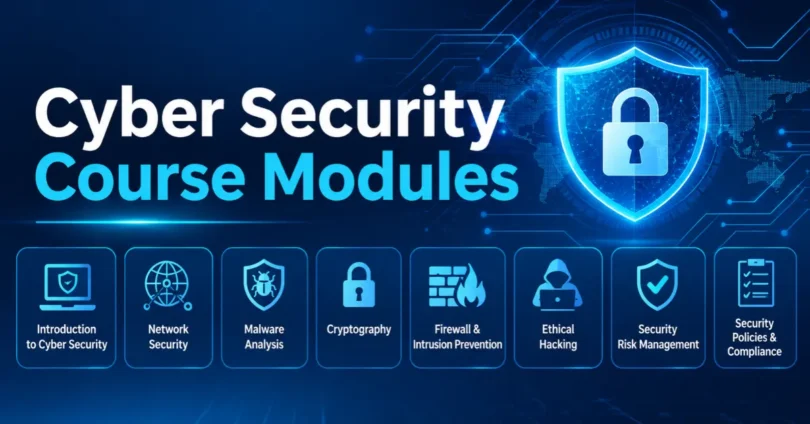
Cyber Security Course Modules, help students learn how to protect computers, networks, websites and personal data from online threats. These modules cover basic computer skills, network security, ethical hacking, malware protection, data safety and practical training. Whether you are a beginner or want to improve your technical skills, a cyber security course can help you understand how cyber attacks happen and how to prevent them.
Practical Knowledge Gained from Cyber Security Modules
Cyber Security Modules provide practical knowledge that helps students understand how to protect digital systems. Students learn to identify security risks, check network weaknesses, protect personal data and use basic security tools. They also practice solving common security problems in safe lab environments. This hands-on learning helps students build confidence and use their skills in real-life situations.
Basic Computer Knowledge Before Starting Cyber Security
Before learning cyber security, students should understand some basic computer concepts.
- Computer Hardware and Software Basics: Learn about computer parts, programs and how they work.
- Operating Systems and Their Functions: Understand Windows, Linux and how operating systems manage computers.
- Internet and Web Browsing Basics: Learn how the internet works and how to browse websites safely.
- Introduction to Computer Networks: Understand how computers connect and share information.
These basic skills build a strong foundation for learning cyber security.
Cyber Security Fundamentals
Cyber security fundamentals teach students how to protect computers, networks and data from online threats.
- Meaning and Importance of Cyber Security: Learn what cyber security is and why it matters.
- Types of Cyber Security: Understand network, application, cloud and information security.
- Common Cyber Security Threats: Learn about viruses, hackers, malware and online attacks.
- CIA Triad: Understand confidentiality, integrity and availability.
- Security Risks and Vulnerabilities: Learn how to find and reduce security weaknesses.
These basic concepts help students build strong cyber security knowledge.
Computer Networking and Network Security
This module teaches students how computer networks work and how to keep them safe.
- How Computer Networks Work: Learn how computers connect and share data.
- IP Addresses, DNS, and Network Protocols: Understand how devices communicate online.
- TCP/IP and OSI Models: Learn the basic rules of network communication.
- Firewalls and VPNs: Understand how these tools protect networks.
- Network Monitoring and Protection: Learn how to detect and prevent network threats.
These skills help students understand and protect computer networks.
Operating Systems and Linux Fundamentals
This module helps students understand operating systems and basic Linux skills.
- Introduction to Windows and Linux: Learn about two common operating systems.
- Basic Linux Commands: Understand simple commands to manage files and folders.
- File Permissions and User Accounts: Learn how to control access to computer files.
- System Administration and Security: Understand how to manage and protect systems.
- Linux Security Tools: Learn about tools used to check and improve system security.
These skills help students manage and protect computer systems.
Digital Forensics and Cyber Security Laws
This module teaches students how to investigate cybercrimes and understand digital safety laws.
- Introduction to Digital Forensics: Learn how digital evidence is collected and examined.
- Collecting and Protecting Digital Evidence: Understand how to save evidence safely.
- Basic Computer and Network Investigation: Learn how to investigate suspicious activities.
- Cyber Security Ethics and Professional Responsibilities: Understand the importance of responsible online behavior.
- Cybercrime Laws and Data Privacy: Learn about laws that protect people and their personal information.
These skills help students investigate cybercrimes and use technology responsibly.
Web Application and Database Security
This module teaches students how to protect websites and databases from online attacks.
- How Websites and Web Applications Work: Learn how websites operate.
- Common Website Security Risks: Understand common website weaknesses.
- SQL Injection and Cross-Site Scripting (XSS): Learn about common web attacks.
- Database Security and Access Control: Understand how to protect stored data.
- Secure Web Application Testing: Learn how to check website security.
These skills help students build and protect safer websites and databases.
Practical Cyber Security Training and Lab Projects
This module gives students hands-on experience through simple cyber security exercises.
- Setting Up a Safe Cyber Security Lab: Learn to create a safe practice environment.
- Practicing Network Security: Practice protecting computer networks.
- Performing Basic Vulnerability Assessments: Find common security weaknesses.
- Completing Ethical Hacking Exercises: Practice safe and legal hacking techniques.
- Investigating a Simulated Cyber Attack: Learn how to identify and study cyber attacks.
These practical activities help students improve their cyber security skills.
Cloud, Wireless, and Mobile Security
This module teaches students how to protect cloud data, wireless networks, and mobile devices.
- Introduction to Cloud Security: Learn how cloud systems store and protect data.
- Cloud Data Protection and Access Control: Understand how to keep cloud information safe.
- Wi-Fi and Wireless Network Security: Learn how to protect wireless connections.
- Mobile Device Security: Understand how to secure smartphones and tablets.
- IoT Security Basics: Learn how to protect smart devices connected to the internet.
These skills help students protect data and devices from online threats.
Benefits of Cyber Security Course Modules
Cyber Security Course Modules offer many benefits for students:
- Builds Technical Skills: Helps students learn important security skills.
- Protects Personal Data: Teaches ways to keep information safe.
- Improves Problem-Solving: Helps students find and fix security issues.
- Provides Practical Experience: Gives students hands-on learning opportunities.
- Supports Career Growth: Prepares students for future cyber security jobs.
These benefits help students become more confident and skilled in cyber security.
Common FAQs About Cyber Security Course Modules
Here are some faqs of Cyber Security Course Modules:
Do Cyber Security Course Modules Include Real-World Examples?
Yes, many courses use real-world examples to help students understand online threats and security problems.
Are Cyber Security Course Modules Difficult to Learn?
No, beginners can learn them easily by starting with basic topics and moving to advanced lessons step by step.
What Tools Are Used During Cyber Security Training?
Students may use tools such as Wireshark, Nmap, and Kali Linux to practice security tasks.
Can I Study Cyber Security Modules Online?
Yes, many training institutes and online platforms offer cyber security lessons that students can study from home.
Do Cyber Security Courses Teach Password Protection?
Yes, students learn how to create strong passwords, use multi-factor authentication, and protect user accounts.
How Can Students Improve Their Cyber Security Knowledge?
Students can improve by practicing in safe labs, reading security guides, and learning about new online threats.
Do Cyber Security Modules Cover Email Security?
Yes, students learn how to identify suspicious emails, avoid harmful links, and protect email accounts.
Can Cyber Security Training Help Small Businesses?
Yes, it teaches useful ways to protect business data, customer information, and computer systems.
Conclusion
Cyber Security Course Modules provide students with the knowledge and skills needed to protect computers, networks, websites, and personal data. From basic computer knowledge to advanced security training, each module helps students understand different parts of cyber security. By learning these topics and practicing regularly, beginners can build strong skills and prepare for future opportunities in the cyber security field.