A Modern IT Department Structure, Plays an important role in helping businesses manage their technology, protect data, and improve daily work. It brings different IT teams and skilled professionals together to keep computer systems, networks, software, and digital services running smoothly. A well-organized IT department also helps companies solve technical problems, use new technologies, and reach their business goals. We will explore the main teams, key roles, responsibilities, and best ways to build a successful modern IT department.
How a Modern IT Department Is Organized
A modern IT department is organized into different teams, and each team has its own duties. These teams work together to manage technology, solve computer problems, protect company data, and support daily business activities. A good IT department has clear leadership, skilled employees, and well-planned responsibilities.
IT Leadership and Management
IT leadership guides the whole department. The leaders make important technology decisions, manage employees, set goals, and make plans for the future. They also make sure that IT activities support the company’s business needs.
Main Technical Teams
Technical teams handle the main technology tasks of a company. These teams may include software development, network management, cloud computing, and cybersecurity. Each team focuses on a specific area to keep systems working properly and safely.
Support and Service Teams
IT support teams help employees when they face computer, internet, software, or hardware problems. They answer questions, fix technical issues, and make sure workers can continue their daily tasks without long delays.
How Different Teams Work Together
All IT teams must work together to achieve common goals. For example, the network team keeps the internet running, the security team protects company information, and the support team helps employees solve technical problems. Good communication between these teams makes the IT department stronger and more effective.
A modern IT department works like a team where every person has a different job, but everyone works together to keep business technology safe, useful, and running smoothly.
Key Leadership Roles in an IT Department
A modern IT department needs strong leaders to manage technology, guide employees, and support business goals.
- Chief Information Officer (CIO): Manages the company’s IT strategy and makes sure technology supports business goals.
- Chief Technology Officer (CTO): Focuses on new technologies, software development, and technical improvements.
- IT Director: Leads IT teams, manages projects, and makes sure daily IT work runs smoothly.
- IT Manager: Supervises IT employees, solves technical problems, and manages daily tasks.
- Chief Information Security Officer (CISO): Protects company data, manages security risks, and creates cybersecurity plans.
Conclusion: These leadership roles help an IT department stay organized, secure, and productive.
Essential Teams in a Modern IT Department
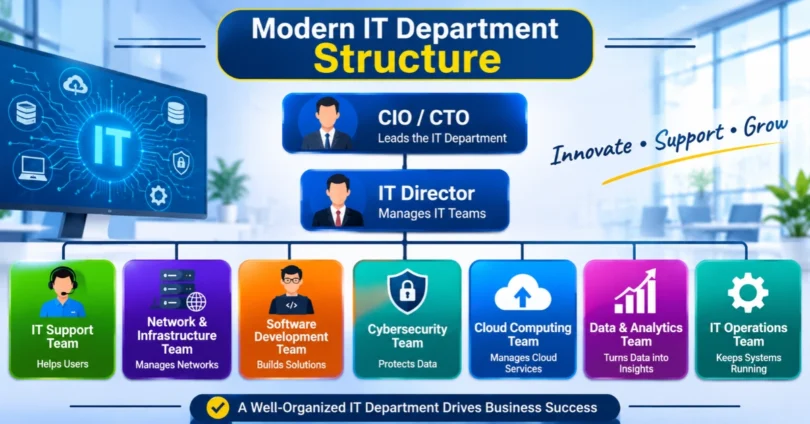
A modern IT department has different teams that work together to manage technology, solve problems, and support business activities.
- IT Support and Help Desk Team: Helps employees fix computer, software, and internet problems.
- Network and Infrastructure Team: Manages computer networks, servers, and other IT equipment.
- Software Development Team: Creates, tests, and maintains websites, apps, and software.
- Cybersecurity Team: Protects company systems and data from hackers and online threats.
- Cloud Computing Team: Manages cloud services and online data storage.
- Data Management and Analytics Team: Organizes company data and uses it to make better decisions.
- IT Operations Team: Keeps IT systems running smoothly and manages daily technical activities.
All these teams work together to keep business technology safe, reliable, and efficient.
Modern IT Department Organizational Chart
A modern IT department organizational chart shows how employees and teams are connected and who reports to whom.
- CIO or CTO: Leads the IT department and makes important technology decisions.
- IT Director: Manages IT teams and plans major technology projects.
- IT Managers: Supervise daily IT activities and guide team members.
- Team Leaders: Manage specific teams, such as cybersecurity, networking, and software development.
- IT Employees: Perform daily technical tasks and provide support to the company.
Example of IT Department Hierarchy:
CIO / CTO → IT Director → IT Managers → Team Leaders → IT Employees
An organizational chart helps everyone understand their roles, responsibilities, and reporting structure.
Different Types of IT Department Structures
Companies use different IT department structures based on their size, needs, and business goals.
- Functional IT Structure: Divides employees into teams based on their skills, such as networking, security, and software development.
- Centralized IT Structure: All IT activities are managed by one main department.
- Decentralized IT Structure: Different business departments manage their own IT tasks.
- Matrix IT Structure: Employees work with different teams and report to more than one manager.
- Hybrid IT Structure: Combines centralized and decentralized systems to provide flexibility.
Choosing the right IT structure helps companies manage technology, employees, and daily tasks more effectively.
Building an Effective Modern IT Department
Building an effective modern IT department requires good planning, skilled employees, and the right technology.
- Identify Business Needs: Understand what technology the company needs to achieve its goals.
- Choose the Right Team Structure: Divide employees into teams according to their skills and responsibilities.
- Hire Skilled IT Professionals: Select experienced people who can manage different technology tasks.
- Set Clear Roles and Responsibilities: Make sure every employee understands their duties.
- Select the Right Tools and Software: Use reliable tools to improve daily work and team performance.
- Create Strong Security Policies: Protect company systems and important information from online threats.
- Monitor Team Performance: Check work regularly and find ways to improve results.
A well planned IT department helps businesses work smoothly, stay secure, and grow with modern technology.
Common FAQs About Modern IT Department Structure
Here are Some Faqs of Modern IT Department Structure:
What is the main goal of a modern IT department?
The main goal is to use technology to improve business operations, increase productivity, and support company growth.
How does an IT department manage technology budgets?
It plans spending, compares technology costs, selects useful tools, and makes sure money is used wisely.
What is IT governance?
IT governance is a set of rules and processes that help companies manage technology, control risks, and make better IT decisions.
Why is IT asset management important?
It helps companies track computers, software, licenses, and other technology equipment to avoid waste and extra costs.
What is the role of IT project management?
IT project management helps teams plan, organize, and complete technology projects within the available time and budget.
How can an IT department reduce technical downtime?
It can use regular system checks, backups, maintenance plans, and quick problem-solving methods to keep services running.
What is disaster recovery in IT?
Disaster recovery is a plan that helps a company restore its data and computer systems after a major failure, cyberattack, or unexpected event.
How can a company measure IT department performance?
A company can measure performance through service response time, system availability, project completion rates, and user satisfaction.
Conclusion
A modern IT department structure is important for every business that wants to grow and work better with technology. It helps companies manage their IT activities, improve teamwork, protect important information, and solve technical problems. A well-organized department also makes it easier to complete projects, support employees, and use new technologies. By choosing the right teams, skilled workers, and clear responsibilities, businesses can build a strong IT department. Modern technologies like artificial intelligence, cloud computing, and automation will make IT departments even more useful and powerful.