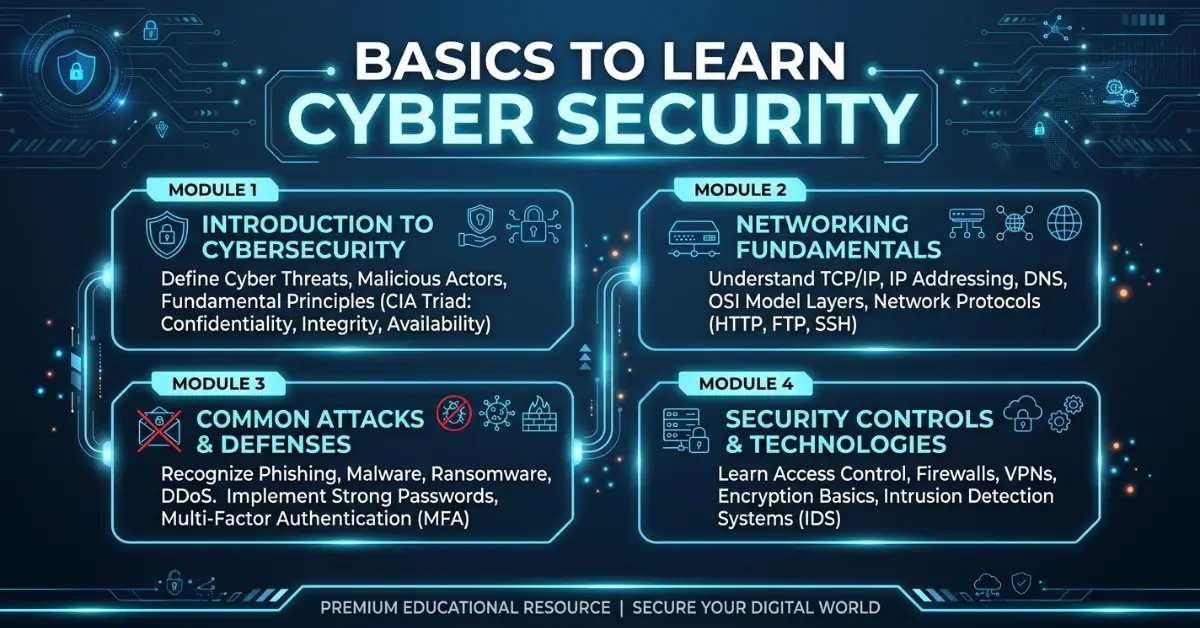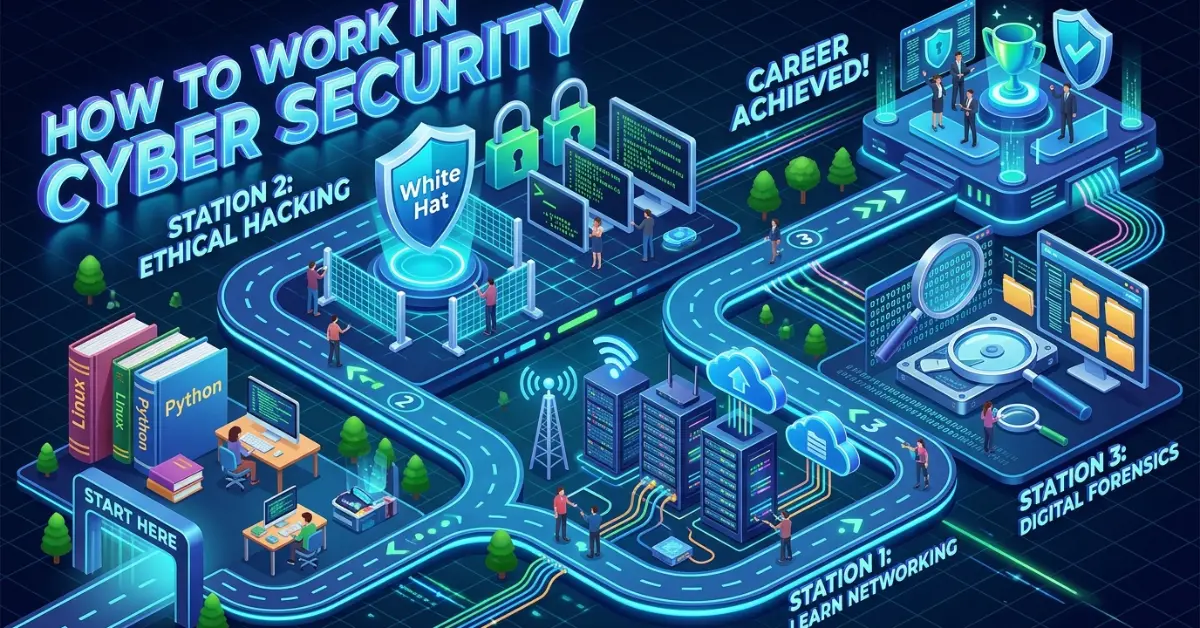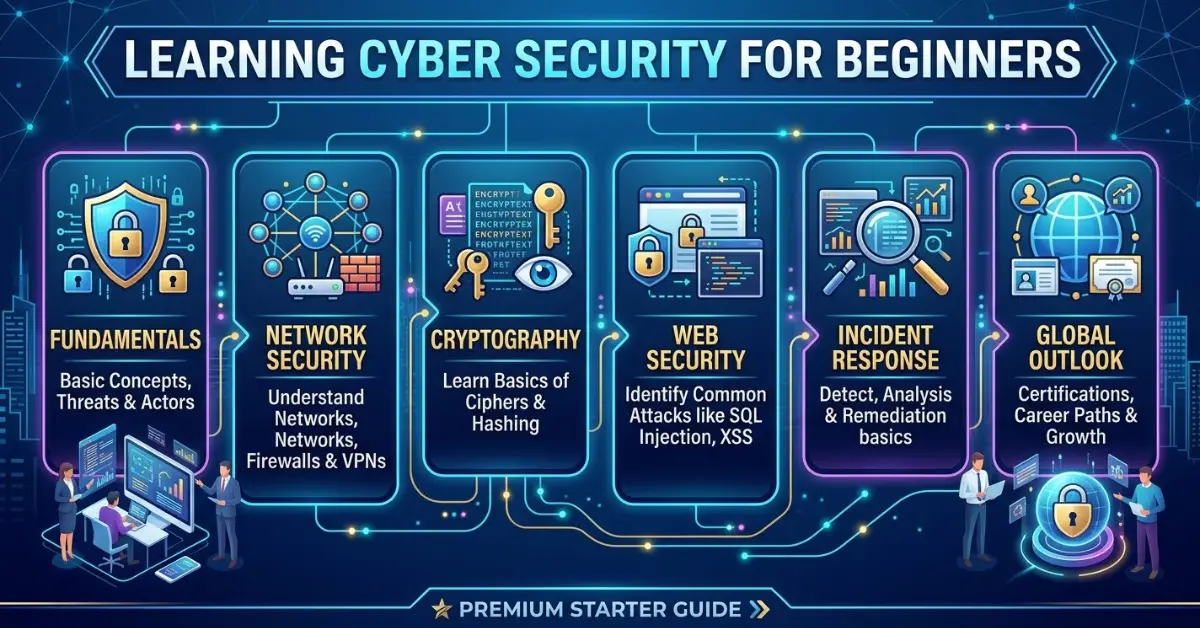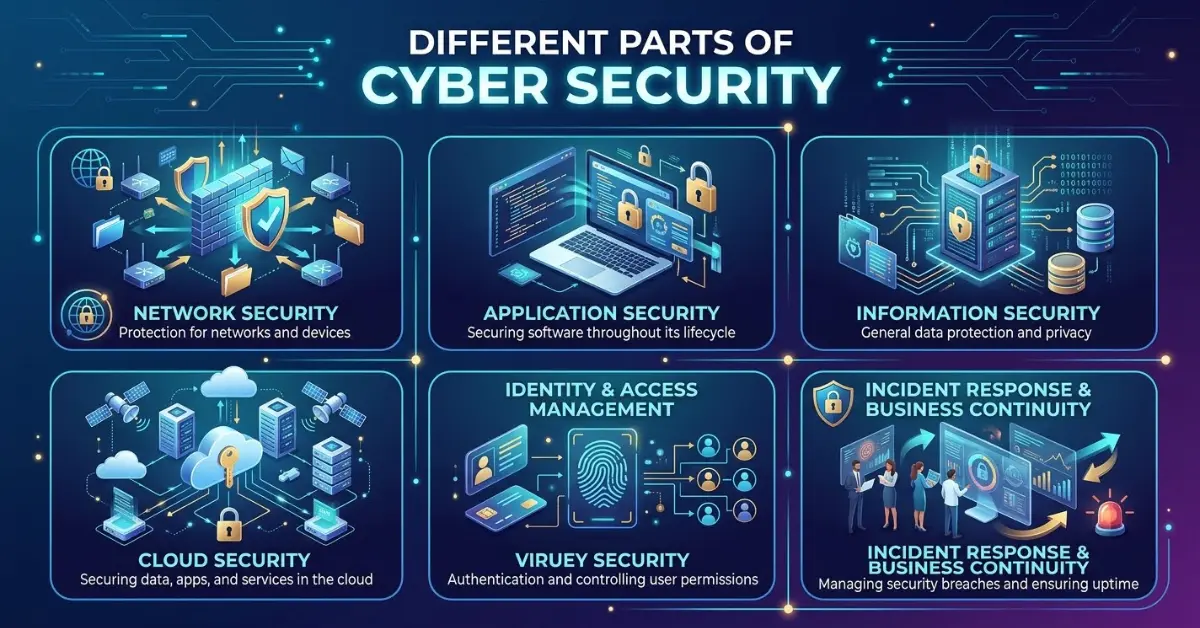
Cyber security is an important part of our digital world because it helps protect computers, networks, websites, and personal information from online threats. If you are a student, beginner, or someone interested in technology, learning the right cyber security topics can help you understand how online protection works. This Cyber Security Topic List, Covers basic concepts, common cyber attacks, network security, ethical hacking, data protection, security tools, and advanced technologies. It will help you learn cyber security step by step, understand important concepts, and discover the skills needed to build a future in this growing field.
Basic Cyber Security Topics
Basic cyber security topics help beginners understand how computers, networks, and personal information stay safe from online threats. Before learning advanced security methods, it is important to understand these basic concepts. Here are some important topics every beginner should know:
Computer Security Fundamentals
Computer security means protecting computers, files, and programs from unauthorized access, damage, or harmful software. It helps keep devices safe and allows users to work without worrying about common security risks.
Internet and Network Basics
Understanding how the internet and computer networks work is important for learning cyber security. This topic covers IP addresses, routers, servers, and data transfer between connected devices
Operating System Security
Operating system security focuses on protecting systems such as Windows, Linux, and macOS. It includes system updates, user permissions, security settings, and protection against harmful programs.
Data Protection and Privacy
Data protection means keeping personal and business information safe from loss, theft, or unauthorized access. It also teaches users how to share information carefully and protect their online privacy.
Password Security and User Authentication
Password security helps protect accounts from unauthorized users. Strong passwords, two-factor authentication, and secure login methods make it harder for attackers to access private accounts.
Types of Security Controls
Security controls are methods used to reduce cyber risks and protect digital systems. Common types include:
- Preventive Control
- Detective Controls
- Corrective Controls
These basic topics create a strong foundation for beginners and make it easier to understand more advanced areas of cyber security.
Common Cyber Security Threats and Attacks
Cyber security threats and attacks are harmful activities that can damage computers, steal personal information, or access private data without permission. Understanding these threats helps users recognize online dangers and protect their digital devices.
- Malware Attacks
- Phishing Attacks
- Ransomware Attacks
- Spyware and Adware
- Password Attacks
- Denial-of-Service (DoS) Attacks
- Man-in-the-Middle Attacks
- Social Engineering Attacks
Learning about these common threats helps beginners understand online risks and take better steps to keep their information and devices safe.
Network Security Topics You Should Learn
Network security focuses on protecting computer networks, connected devices, and shared information from unauthorized access and online attacks. Learning these topics helps beginners understand how networks stay safe and how security systems prevent possible threats.
- Firewall and Its Working
- Virtual Private Network (VPN)
- Wireless Network Security
- Network Monitoring
- Intrusion Detection Systems (IDS)
- Intrusion Prevention Systems (IPS)
- Secure Network Protocols
Understanding these network security topics will help you build strong networking knowledge and learn how to protect connected systems from cyber threats.
Web and Application Security Topics
Web and application security focuses on protecting websites, web applications, and online services from hackers and harmful activities. These topics help beginners understand how websites work, identify common security weaknesses, and keep user information safe from online attacks.
- Website Security Basics
- SQL Injection
- Cross-Site Scripting (XSS)
- Cross-Site Request Forgery (CSRF)
- Secure Login Systems
- API Security
- Secure Software Development
Learning these topics helps you understand website protection, prevent common application attacks, and build safer online platforms.
Career Opportunities After Learning Cyber Security
Learning cyber security can open the door to many career opportunities in the technology industry. As businesses and organizations need better protection for their digital systems, skilled cyber security professionals are becoming increasingly important.
- Cyber Security Analyst: Monitors computer systems and networks to find security risks and protect important information.
- Ethical Hacker: Tests computer systems with permission to find weaknesses before harmful hackers can use them.
- Penetration Tester: Performs authorized security tests to discover vulnerabilities in websites, applications, and networks.
- Security Engineer: Designs and manages security systems to protect an organization’s digital resources.
- Digital Forensics Analyst: Examines computers and digital devices to collect and study evidence after cyber incidents.
- Security Consultant: Advises businesses on how to improve their cyber security and reduce online risks.
- Incident Response Specialist: Helps organizations detect, manage, and recover from cyber attacks.
Cyber security offers many career paths for people interested in technology, problem-solving, and digital protection. Learning the right skills and gaining practical experience can help you build a successful career in this field.
Common FAQs About Cyber Security Topic List
Here are Some Faqs of Cyber Security Topic List:
What is the CIA triad in cyber security?
The CIA triad is a basic security model that includes Confidentiality, Integrity, and Availability. It helps protect information from unauthorized access, unwanted changes, and system interruptions.
What is risk management in cyber security?
Risk management is the process of finding possible security risks, understanding their impact, and taking steps to reduce them before they cause serious problems.
What is multi-factor authentication (MFA)?
Multi-factor authentication is a security method that requires users to provide two or more forms of identity verification before accessing an account.
What is a security audit?
A security audit is a detailed check of an organization’s computer systems, policies, and security practices to find weaknesses and improve protection.
What is a security patch?
A security patch is an update released by software developers to fix security weaknesses and protect programs from known attacks.
What is a security operations center (SOC)?
A Security Operations Center is a team or department that monitors an organization’s digital systems, investigates suspicious activities, and helps manage security incidents.
What is vulnerability management?
Vulnerability management is an ongoing process of finding, checking, fixing, and tracking security weaknesses in computer systems and applications.
What is the role of cyber security policies?
Cyber security policies provide rules and guidelines for using computers, networks, and digital information safely. They help employees understand their security responsibilities and follow safe practices.
Conclusion
Cyber security is an important part of today’s digital world because it helps protect computers, networks, websites, and personal information from online threats. Learning the cyber security topic list is a great way for students, beginners, and technology lovers to understand different areas of digital protection. From basic security concepts and common cyber attacks to network security, ethical hacking, and advanced technologies, every topic provides useful knowledge. Start with the basics, practice your skills through safe learning activities, and gradually explore advanced subject