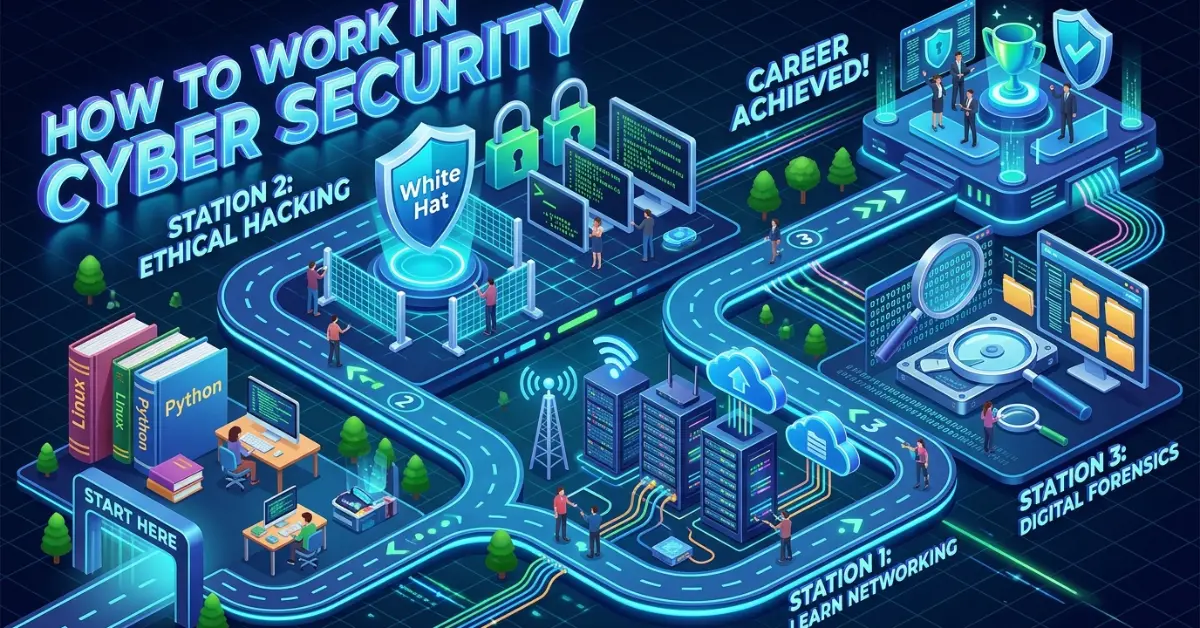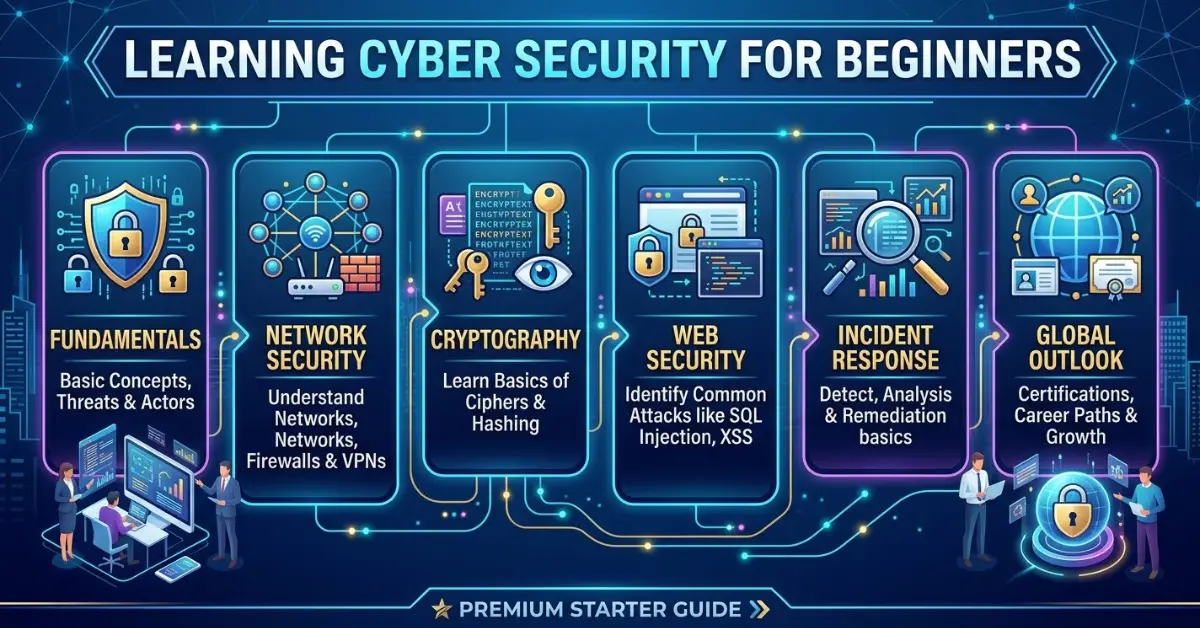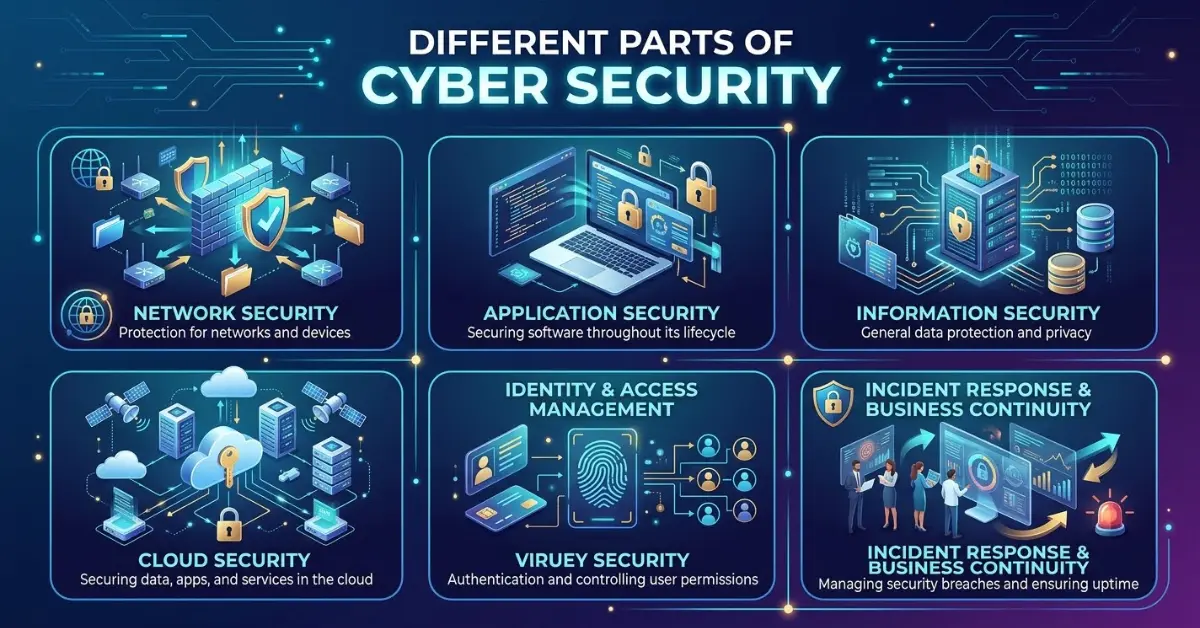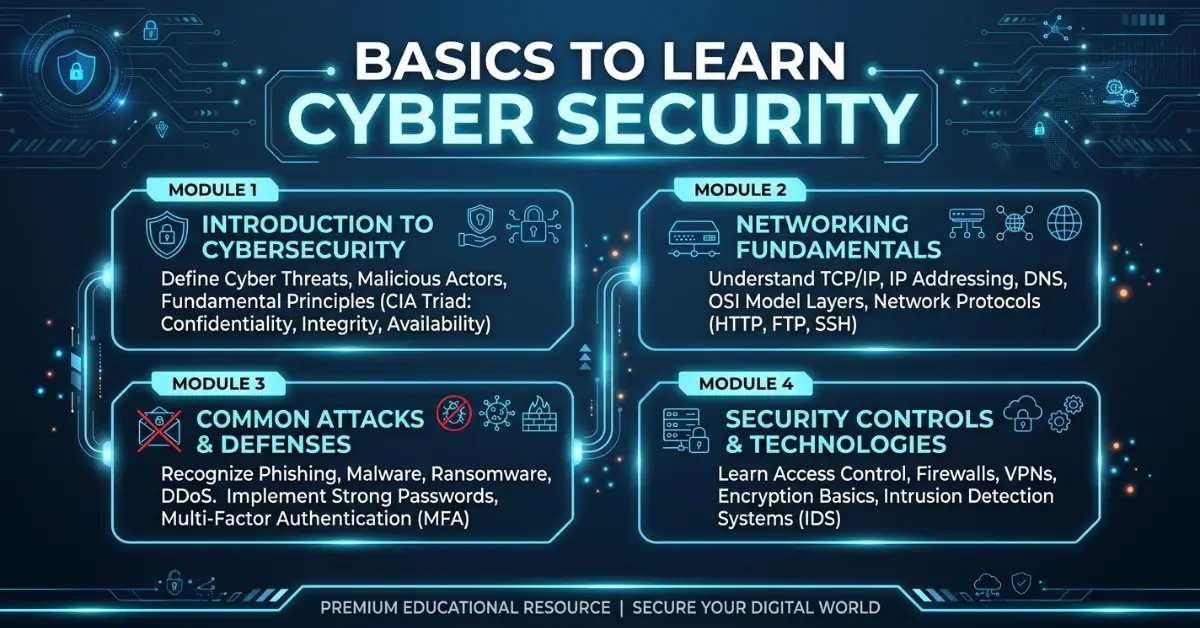
Learning the Basics to Learn Cyber Security, Is the first step toward staying safe in the digital world. Today, people use computers, mobile phones, and the internet for study, work, and daily tasks. However, online threats such as hackers, fake emails, and data theft can put personal information at risk. The good news is that anyone can start learning cyber security with basic computer knowledge and regular practice. You will discover essential skills, beginner friendly tools, and simple steps to build your cyber security knowledge from the ground up.
Understand What Cyber Security Means
Cyber security is the practice of protecting computers, mobile devices, networks, and personal information from online attacks. It helps keep private data safe from hackers, harmful software, and people who try to access information without permission. For example, using a strong password and turning on two-factor authentication can help protect your online accounts. Learning cyber security starts with understanding these basic risks and knowing how to prevent them. These skills help students, businesses, and everyday internet users stay safer online.
How the Internet and Networks Work
Understanding how the internet and networks work is an important part of learning cyber security.
- Computer Networks: A network connects two or more devices so they can share information, files, and resources.
- IP Addresses: An IP address helps identify a device on a network and allows data to reach the correct destination.
- Routers: A router connects devices to a network and directs data between networks, including your home network and the internet.
- DNS (Domain Name System): DNS converts website names, such as google.com, into IP addresses that computers use to find websites.
- Ports: Ports help a computer direct network traffic to the correct application or service.
- HTTP and HTTPS: HTTP is used to transfer website data, while HTTPS protects the connection using encryption.
- Data Transfer: When you open a website, your device sends a request to a server, which responds by sending the required information.
- Network Security: Firewalls and secure network settings help control connections and protect devices from unwanted access.
Learning these networking basics helps you understand how online communication works and prepares you to explore cyber security threats and protection methods.
Build Strong Password and Account Security
Strong passwords and secure accounts are essential for protecting your personal information from hackers and online threats.
- Create Strong Passwords: Use long passwords with a mix of letters, numbers, and symbols. A unique passphrase made from several unrelated words can also be a strong choice.
- Avoid Password Reuse: Use a different password for each account so that one stolen password does not put all your accounts at risk.
- Use a Password Manager: A password manager helps you create, store, and manage strong passwords without memorizing each one.
- Enable Two Factor Authentication (2FA): Add another layer of security by requiring a second verification step when signing in.
- Protect Recovery Information: Keep your recovery email and phone number up to date so you can regain access to your account if needed.
- Recognize Fake Login Pages: Check website addresses carefully before entering your password, and avoid clicking suspicious links in emails or messages.
- Review Account Activity: Check recent sign-ins and security alerts to identify activity you do not recognize.
- Update Your Password When Necessary: Change a password immediately if you believe it has been stolen or exposed.
Building strong password habits and enabling extra security features can help protect your accounts, personal data, and online identity from common cyber threats.
Learn Windows and Linux Fundamentals
Learning Windows and Linux fundamentals is an important step in cyber security. These operating systems help you understand how computers manage files, users, applications, and system permissions. Windows is widely used in homes and offices, while Linux is popular in servers and security labs. Learning basic commands, user accounts, and system settings will help you understand how to protect computers and identify common security risks.
Study Basic Programming and Scripting
Learning basic programming and scripting helps beginners understand how computers follow instructions and perform tasks.
- Learn Python: Start with Python because its simple syntax makes it easier for beginners to understand programming.
- Understand Variables: Learn how to store information, such as names, numbers, and text, in a program.
- Practice Conditions and Loops: Use conditions to make decisions and loops to repeat tasks automatically.
- Explore Functions: Learn how functions organize code into reusable blocks and make programs easier to manage.
- Understand Basic Scripts: Create small scripts to organize files, check text, or process simple data.
- Learn Error Handling: Understand how to find and fix common coding errors so your programs work correctly.
- Practice with Small Projects: Build beginner projects using sample data to improve your programming and problem-solving skills.
Basic programming and scripting provide a strong foundation for understanding security tools, automating tasks, and progressing toward more advanced cyber security skills
Essential Cyber Security Tools
Essential cyber security tools help beginners understand threats, monitor networks, and protect computers from online attacks.
- Wireshark
- Nmap
- Kali Linux
- Wireshark
- Snort
- Metasploit
- Nessus
- Burp Suite
- Microsoft Defender
- pfSense
- OpenVAS
- Splunk
Learning these tools helps beginners build practical cyber security skills and understand how digital systems are protected.
Common FAQs About Basics to Learn Cyber Security
Here are Some FAQs of Basics to Learn Cyber Security:
Do I Need a College Degree to Start Learning Cyber Security?
No, you do not always need a college degree to begin learning cyber security. You can start with online courses, practical exercises, and self-study. However, some employers prefer candidates with relevant degrees or certifications.
Is Mathematics Important for Learning Cyber Security?
Basic mathematics is enough for many beginner topics. Logical thinking and problem-solving are more important for everyday tasks. Advanced mathematics may be useful later if you specialize in cryptography or security research.
Can I Learn Cyber Security Using a Mobile Phone?
Yes, you can study basic concepts, watch lessons, read documentation, and complete some online quizzes using a mobile phone. However, a computer is more useful for hands-on labs and practicing technical skills.
What Is the Difference Between Cyber Security and Ethical Hacking?
Cyber security is the broader field of protecting devices, networks, and information. Ethical hacking is one part of this field that involves testing systems for weaknesses with proper permission.
How Can I Keep Track of My Cyber Security Learning Progress?
Maintain a learning journal where you record completed lessons, practical exercises, mistakes, and solutions. Set small weekly goals and review your notes regularly to identify areas that need improvement.
Are Cyber Security Skills Useful Outside the Technology Industry?
Yes, cyber security skills are valuable in education, healthcare, banking, retail, and many other industries. Organizations in these fields need to protect customer records, business information, and digital services.
How Can I Identify Reliable Cyber Security Learning Resources?
Choose resources from recognized educational platforms, universities, professional organizations, and official software documentation. Check publication dates, review the course content, and avoid websites that promise unrealistic results.
What Should Beginners Know About Cyber Security Ethics?
Beginners should respect privacy, protect confidential information, and obtain permission before testing any system. They should follow applicable laws and use practice environments designed for security training.
Conclusion
Learning the basics to learn cyber security is an important step toward building a strong future in the digital world. Beginners can start by understanding computer systems, internet connections, security principles, and essential tools. Regular practice, small projects, and safe online learning labs can help turn basic knowledge into useful skills. Remember, cyber security is a growing field that requires patience, curiosity, and continuous learning. Start with simple tasks, improve your knowledge step by step, and always use your skills responsibly to help make the internet a safer place for everyone.