Learning Cyber Security for Beginners, Is a great way to understand how to stay safe in the digital world. Today, people use computers, mobile phones, and the internet for work, study, and daily activities. However, online threats like viruses, hackers, and fake emails can put personal information at risk. The good news is that anyone can start learning cyber security without advanced technical skills. Will learn the basics, explore useful tools, practice simple security skills, and discover how to take your first steps toward a future in cyber security.
Understand the Basics of Cyber Security
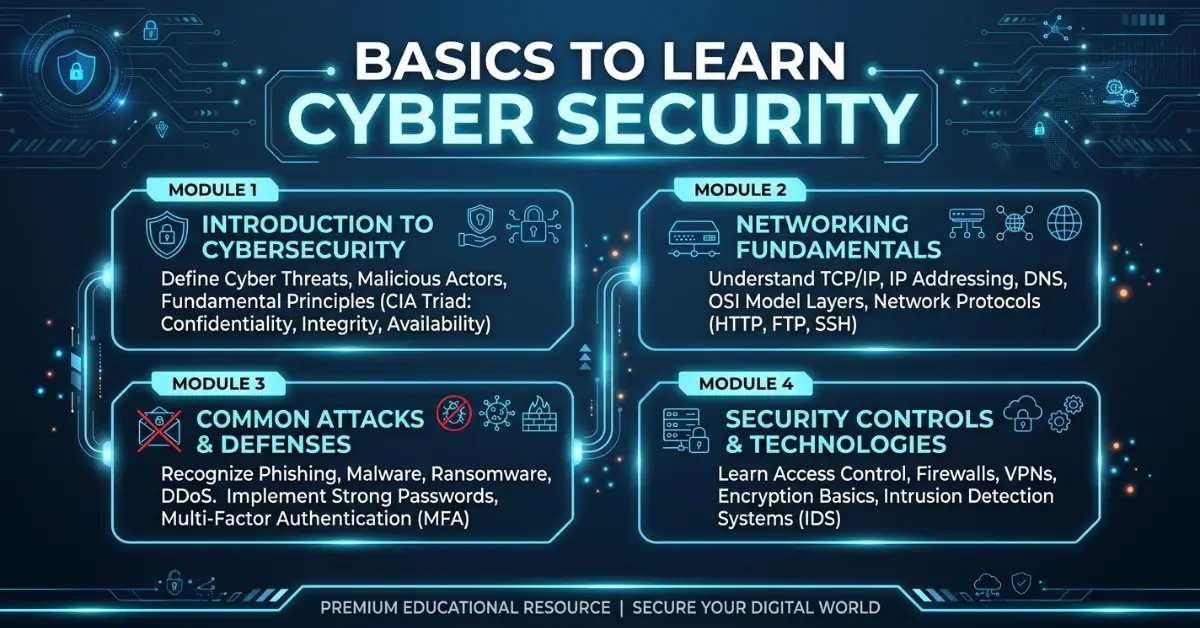
Cyber security is the process of protecting computers, mobile phones, networks, and personal information from online threats. Beginners should learn about common risks such as viruses, phishing, malware, and weak passwords. They should also understand how to create strong passwords, use two-factor authentication, and keep devices updated. Learning these basic skills helps you stay safe online and builds a strong foundation for further cyber security learning.
Learn Basic Computer and Networking Skills
Learning basic computer and networking skills is an important step for beginners in cyber security. You should understand how computers work, learn about operating systems like Windows and Linux, and know how to manage files and software. Networking basics, such as IP addresses, routers, DNS, and internet connections, will help you understand how devices communicate. These skills build a strong foundation and make it easier to learn cyber security tools and protect systems from online threats.
Set Up a Safe Learning Environment
Setting up a safe learning environment helps beginners practice cyber security skills without putting real devices or data at risk.
- Use Your Own Computer: Practice on your personal computer to learn basic security skills.
- Install a Virtual Machine: Use tools like VirtualBox to create a safe environment for testing.
- Choose Legal Practice Labs: Use beginner-friendly platforms to learn cyber security through practical exercises.
- Keep Software Updated: Update your operating system and security tools to reduce risks.
- Use Strong Passwords: Protect your accounts with strong passwords and two-factor authentication.
- Practice Ethically: Test only systems you own or have clear permission to access.
A safe learning environment helps you build practical skills while protecting your devices and respecting others’ privacy.
Explore the Main Areas of Cyber Security
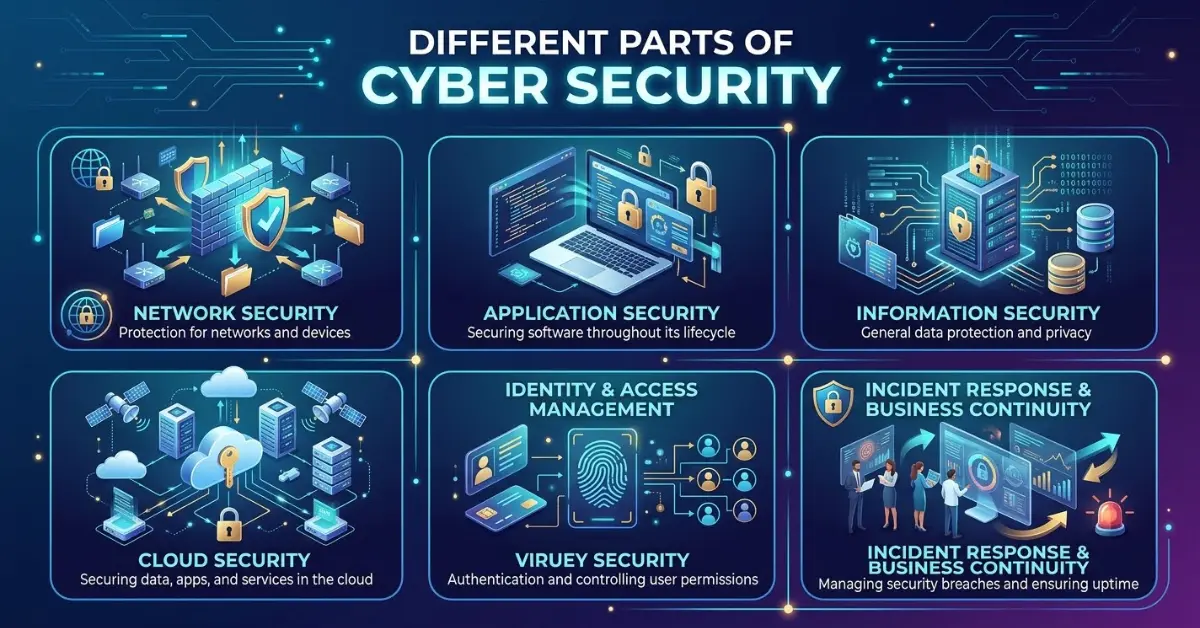
Cyber security has several important areas that help protect computers, networks, applications, and personal information.
- Network Security: Protects networks from hackers and online threats.
- Application Security: Keeps websites and apps safe from attacks.
- Cloud Security: Protects data stored in online services.
- Information Security: Keeps private and sensitive information secure.
- Ethical Hacking: Finds security weaknesses with proper permission.
- Incident Response: Helps detect and manage cyber attacks.
Learning these areas helps beginners understand cyber security and choose the right path for their future.
Learn the Essential Cyber Security Tools
Cyber security tools help beginners protect devices, check networks, and understand online threats.
- Antivirus Software: Detects and removes harmful programs.
- Firewalls: Help block unwanted network traffic.
- Wireshark: Helps analyze network traffic.
- Nmap: Checks networks for active devices and open ports with permission.
- Password Managers: Store and manage strong passwords securely.
- Multi Factor Authentication (MFA): Adds an extra layer of account protection.
Learning these tools helps beginners build practical cyber security skills and protect digital systems more effectively.
Practice Cyber Security with Beginner Friendly Projects
Practical projects help beginners improve their cyber security skills and understand how online protection works.
- Create Strong Passwords: Learn to make passwords that are difficult to guess.
- Identify Phishing Emails: Practice spotting suspicious messages and links.
- Secure Your Wi-Fi: Learn basic steps to protect your home network.
- Explore Security Labs: Practice basic security tasks in legal training environments.
- Check File Safety: Learn how antivirus software detects harmful files.
These beginner friendly projects help you gain practical experience and build confidence in cyber security.
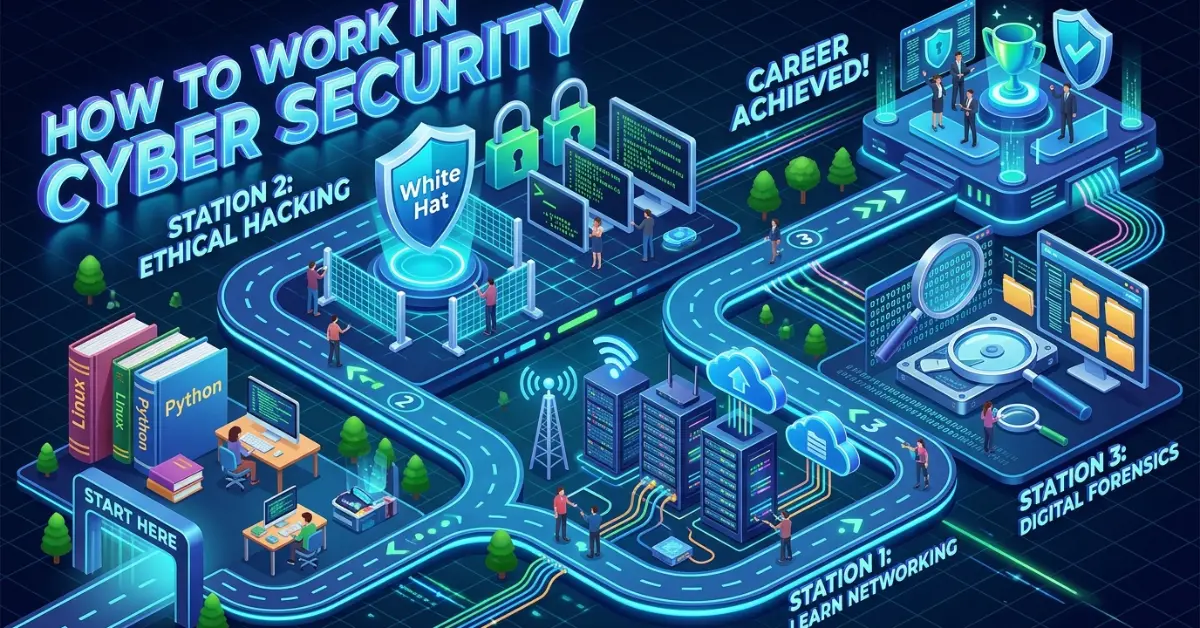
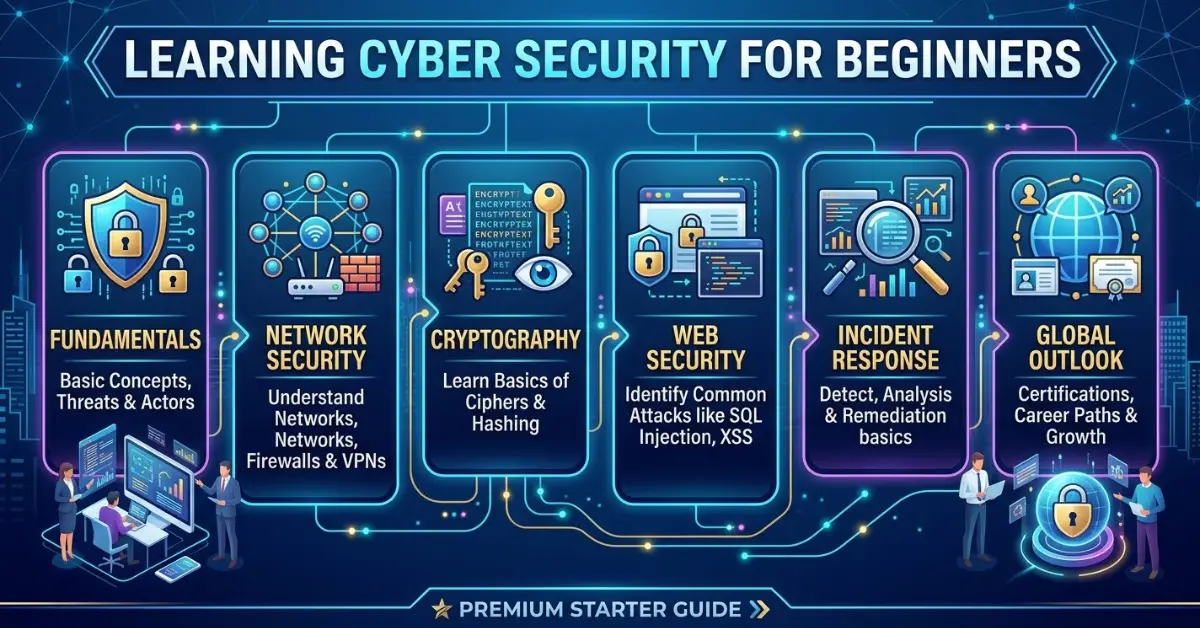
Follow a Step by Step Cyber Security Learning Plan
A simple learning plan helps beginners develop cyber security skills in the right order.
Learn Computer Basics: Understand operating systems, files, and software.
Study Networking: Learn IP addresses, DNS, and internet connections.
Understand Cyber Threats: Explore malware, phishing, and online attacks.
Learn Linux Basics: Practice simple commands and file management.
Explore Security Tools: Learn how basic security tools work.
Practice Projects: Use legal labs to improve your skills.
Review Your Progress: Practice regularly and improve your knowledge.
Following these steps helps you build a strong foundation and progress confidently in cyber security.
Choose Your First Cyber Security Career Path
Choosing a career path helps beginners focus on the skills they need to learn.
- Security Analyst: Monitors systems and detects security threats.
- Ethical Hacker: Finds security weaknesses with proper permission.
- Digital Forensics: Investigates digital evidence after security incidents.
- Cloud Security Specialist: Protects data and systems stored in the cloud.
- Application Security Specialist: Helps keep websites and software secure.
Choose a career path based on your interests and build your skills through regular practice.
Build Your Cyber Security Portfolio
A cyber security portfolio shows your skills, projects, and progress to potential employers.
- Add Practice Projects: Include projects you have completed in legal labs.
- Write Project Reports: Explain what you learned and how you solved problems.
- Show Your Skills: List your knowledge of networking, Linux, and security tools.
- Include Certificates: Add relevant courses and certifications you have completed.
- Update Regularly: Add new projects as your skills improve.
A strong portfolio helps you demonstrate your practical knowledge and prepare for future cyber security opportunities.
Common FAQs About Learning Cyber Security for Beginners
Here are Some FAQs of Learning Cyber Security for Beginners:
Can I learn cyber security without a degree?
Yes, you can learn cyber security without a degree. Online courses, practical projects, and self-study can help you develop useful skills.
How long does it take to learn cyber security?
It depends on your study time and learning goals. You may understand the basics in a few months, while advanced skills usually take longer.
Is coding necessary for cyber security?
Coding is not required for every cyber security role. However, learning Python or basic scripting can help you automate tasks and understand security problems.
Which programming language is best for cyber security beginners?
Python is a good starting point because its simple syntax makes it easier to learn. It is useful for automation, basic scripting, and security analysis.
Can I learn cyber security using a mobile phone?
Yes, you can study basic concepts and take online courses on a mobile phone. However, a computer is more useful for hands-on practice with security tools.
Are free resources available to learn cyber security?
Yes, websites such as Cisco Networking Academy, TryHackMe, and PortSwigger Web Security Academy offer learning resources for different skill levels.
What mathematics skills are needed for cyber security?
Basic mathematics and logical thinking are enough to start learning many cyber security topics. Advanced mathematics is useful in specialized fields such as cryptography.
How can I stay updated with new cyber security threats?
Follow trusted security blogs, read threat reports, and learn about new vulnerabilities from reliable sources. Regular learning helps you understand changing online risks.
Conclusion
Learning Cyber Security for Beginners is a great way to build useful digital skills and explore future career opportunities. Start with basic computer knowledge, study networking, and learn how to protect online information. Practice through safe projects, explore different security tools, and improve your skills step by step. You do not need to learn everything in one day. With patience, regular practice, and a willingness to learn, you can build a strong foundation and move toward a successful future in cyber security.