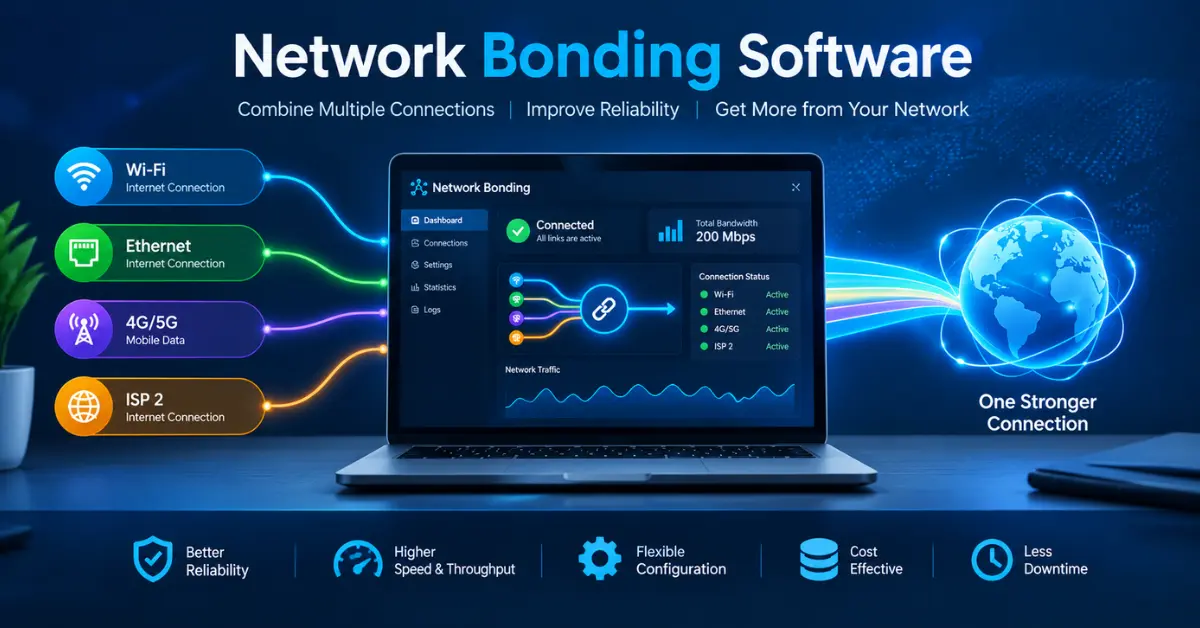
Network Bonding Software, Helps combine two or more network connections to improve network reliability and make better use of available bandwidth. It can help businesses, IT teams, and other users keep their devices connected when one network link fails. Some solutions can also share network traffic across multiple connections for better performance. You will learn how network bonding software works, its main benefits, common types, and how to choose the right solution for your needs.
How Does Network Bonding Software Work?
Network bonding software combines multiple network connections to improve reliability and manage data traffic.
- Connects Multiple Networks: It links two or more network connections, such as Ethernet connections, to work together.
- Shares Network Traffic: The software can distribute data across available links, depending on the bonding method.
- Improves Reliability: If one network link fails, some bonding methods allow traffic to continue through another link.
- Manages Bandwidth: It helps use available network capacity more effectively.
- Monitors Connections: Some tools check the status of network links to identify connection problems.
- Works With Network Hardware: Certain bonding methods require compatible network adapters and switch settings to work correctly.
Network bonding software helps manage multiple network links for better reliability and, in some setups, improved network performance
Different Types of Network Bonding
Network bonding uses different methods to manage multiple network connections.
- Load Balancing Bonding
- LACP (Link Aggregation Control Protocol)
- Adaptive Load Balancing
- Round-Robin Bonding
Each network bonding type serves a different purpose, so choose the method that best matches your network hardware, performance needs, and reliability goals.
Active Backup Bonding
Active backup bonding is a network method that uses one active network connection and keeps another connection ready as a backup. Its main purpose is to keep the network working if the primary connection fails.
How Does Active Backup Bonding Work?
- Active Connection: The main network connection carries the data during normal operation.
- Backup Connection: Another network link stays ready to take over if the active link fails.
- Automatic Switching: When the main connection stops working, the system switches to the backup link.
- Connection Recovery: When the main link becomes available again, the system may switch back, depending on its configuration.
Benefits of Active Backup Bonding
- Better Reliability: Helps keep the network connected if one link fails.
- Less Downtime: Reduces interruptions caused by network connection problems.
- Simple Setup: Often easier to configure than some other bonding methods.
- Backup Protection: Provides an alternative network link when the main link stops working.
- Suitable for Businesses: Helps protect servers and important systems from a single network-link failure.
Active backup bonding is a useful choice when a stable network connection is more important than combining the speed of multiple links.
Load Balancing Bonding
Load balancing bonding is a network method that distributes traffic across multiple network connections. It helps use available network capacity more efficiently and can improve performance in supported network setups.
How Does Load Balancing Bonding Work?
- Traffic Distribution: The system shares network traffic across multiple network links.
- Connection Management: It manages how data moves through the available links.
- Better Resource Use: It helps prevent one link from carrying all the traffic when others can also be used.
- Link Monitoring: Some configurations can detect link failures and adjust traffic accordingly.
- Performance Optimization: The results depend on the bonding mode, network hardware, and type of traffic.
Benefits of Load Balancing Bonding
- Better Bandwidth Usage: Makes more effective use of available network links.
- Improved Throughput: Can increase the total amount of data transferred across multiple connections.
- Network Efficiency: Helps distribute traffic instead of relying on a single link.
- Business Support: Can help servers and business networks handle heavier traffic.
- Flexible Configuration: Supports different traffic distribution methods, depending on the system
Load balancing bonding can improve network efficiency by distributing traffic across multiple links, but it does not guarantee faster speeds for every individual connection.
Load Balancing Bonding
Load balancing bonding is a network method that distributes traffic across multiple network connections. It helps use available network capacity more efficiently and can improve performance in supported network setups.
How Does Load Balancing Bonding Work?
- Traffic Distribution: The system shares network traffic across multiple network links.
- Connection Management: It manages how data moves through the available links.
- Better Resource Use: It helps prevent one link from carrying all the traffic when others can also be used.
- Link Monitoring: Some configurations can detect link failures and adjust traffic accordingly.
- Performance Optimization: The results depend on the bonding mode, network hardware, and type of traffic.
Benefits of Load Balancing Bonding
- Better Bandwidth Usage: Makes more effective use of available network links.
- Improved Throughput: Can increase the total amount of data transferred across multiple connections.
- Network Efficiency: Helps distribute traffic instead of relying on a single link.
- Business Support: Can help servers and business networks handle heavier traffic.
- Flexible Configuration: Supports different traffic distribution methods, depending on the system.
Load balancing bonding can improve network efficiency by distributing traffic across multiple links, but it does not guarantee faster speeds for every individual connection.
LACP (Link Aggregation Control Protocol)
LACP (Link Aggregation Control Protocol) is a networking protocol that allows compatible network devices to combine multiple physical network links into one logical link. It helps improve total network capacity and provides link redundancy.
How Does LACP Work?
- Combines Network Links: LACP groups multiple physical Ethernet links into one logical connection.
- Checks Compatibility: It helps connected devices identify and agree on which links can join the group.
- Distributes Traffic: Network traffic is shared across the active links according to the device’s traffic-distribution method.
- Detects Link Problems: If a link fails, traffic can continue over the remaining active links.
- Requires Compatible Devices: The network adapters and switches must support and be configured for LACP.
Benefits of LACP
- Higher Total Capacity: Multiple links can provide greater combined bandwidth for network traffic.
- Improved Reliability: Remaining links can continue carrying traffic if one link fails.
- Better Traffic Distribution: Helps spread network traffic across available links.
- Easy Link Management: Multiple physical links can be managed as one logical connection.
- Useful for Business Networks: Works well in compatible servers, data centers, and enterprise networks.
LACP helps combine Ethernet links for improved network capacity and reliability, but it does not guarantee that a single data transfer will run faster.
Round Robin Bonding
Round robin bonding is a network method that sends data packets through multiple network connections in turn. It aims to use available network links efficiently and may improve total network throughput in suitable configurations.
How Does Round Robin Bonding Work?
- Sends Packets in Turn: The system sends one data packet through one link, then the next packet through another link.
- Uses Multiple Connections: It allows several network interfaces to carry traffic.
- Shares Network Traffic: Data is distributed across available links according to the round-robin order.
- Handles Link Failures: Depending on the bonding setup, the system may continue using the remaining links if one fails.
- Requires Proper Configuration: Compatible network hardware and switch settings may be needed for stable operation.
Benefits of Round Robin Bonding
- Better Link Utilization: Uses multiple network connections to carry data.
- Potentially Higher Throughput: May increase total data transfer capacity in suitable network environments.
- Simple Distribution Method: Sends packets across links in a repeating sequence.
- Useful for Certain Servers: Can suit specific server and local network configurations.
- Multiple Link Support: Allows several physical network links to work together.
Round robin bonding can help use multiple network links, but it may cause packets to arrive out of order and requires careful configuration for reliable performance.
Common FAQs About Network Bonding Software
Here are Some Faqs of Network Bonding Software:
Can Network Bonding Software Work With Different Internet Providers?
Yes, some solutions can combine connections from different internet providers, such as cable, fiber, and mobile data, depending on their technology and configuration.
Does Network Bonding Software Improve Online Gaming?
It may improve connection stability in some setups, but it does not always reduce ping or lag. The result depends on the bonding method, server location, and network quality.
Is Network Bonding Software Safe to Use?
Yes, reputable software can be safe when properly configured. Users should choose trusted providers, keep software updated, and protect their network with strong security settings.
Can Network Bonding Software Work on a Home Network?
Yes, home users can use suitable bonding solutions to improve connection reliability, especially when they have multiple internet connections and compatible equipment.
Does Network Bonding Require a VPN Server?
Not always. Some bonding tools work directly with network interfaces, while certain multi-WAN solutions use a remote server or tunnel to combine internet connections effectively.
Can Network Bonding Software Reduce Internet Downtime?
Yes, it can reduce interruptions when configured to switch traffic to another available connection after a failure. The level of protection depends on the software and network setup.
What Hardware Is Needed for Network Bonding?
Requirements vary by solution. Some tools need multiple network adapters, a compatible switch, or a router, while others can use existing Wi-Fi, Ethernet, or mobile connections.
How Can I Test Whether Network Bonding Is Working?
Check the software’s connection status, disconnect one network link during a controlled test, and monitor whether traffic continues. You can also compare throughput and connection stability before and after setup.
Conclusion
Network bonding software is a useful solution for improving network reliability and making better use of available connections. It helps users manage multiple network links for tasks such as business operations, server management, online meetings, and remote work. Different tools offer different features, so choosing the right software depends on your operating system, hardware, and network needs. Before making a decision, compare the available options, check compatibility, and consider your budget. With the right setup, network bonding software can help you build a more reliable and efficient network.