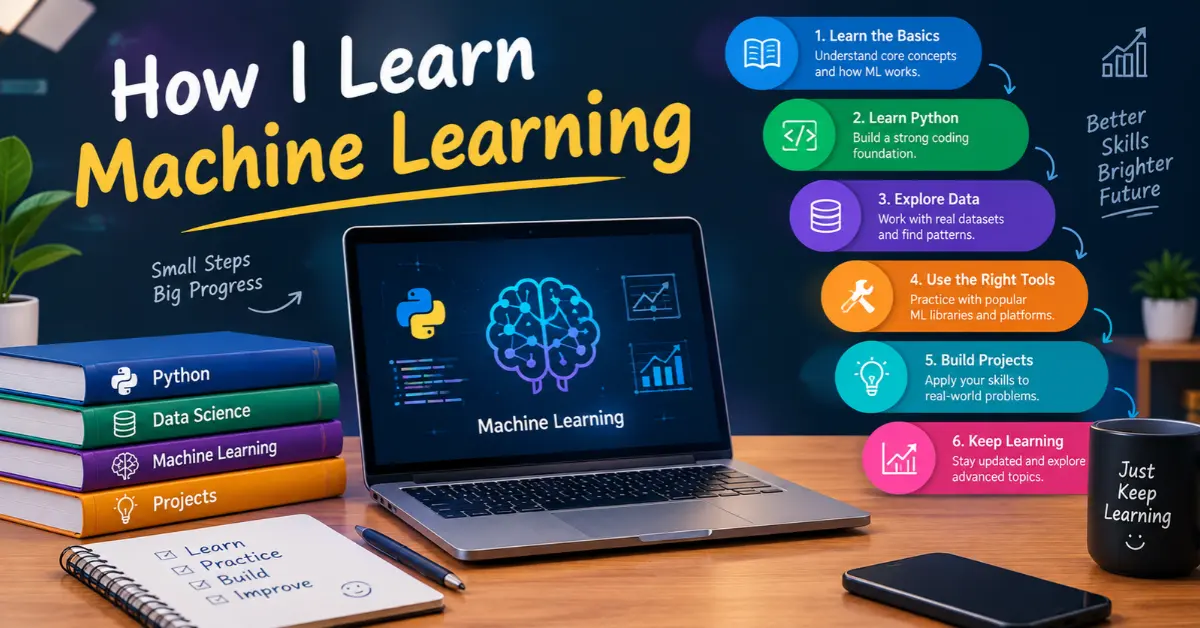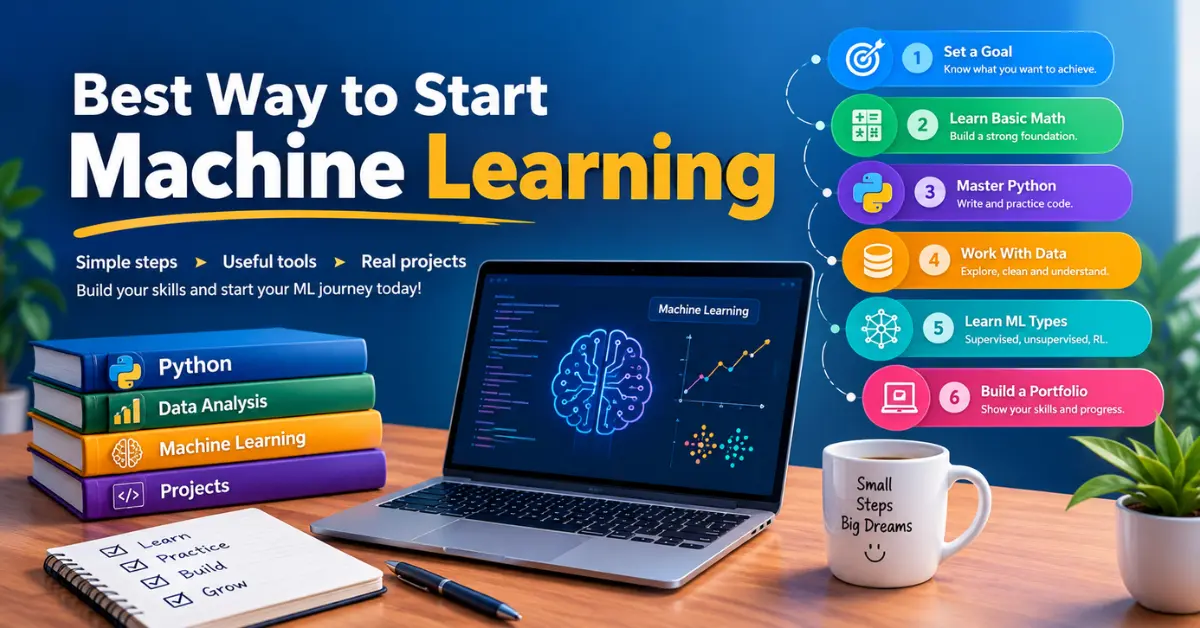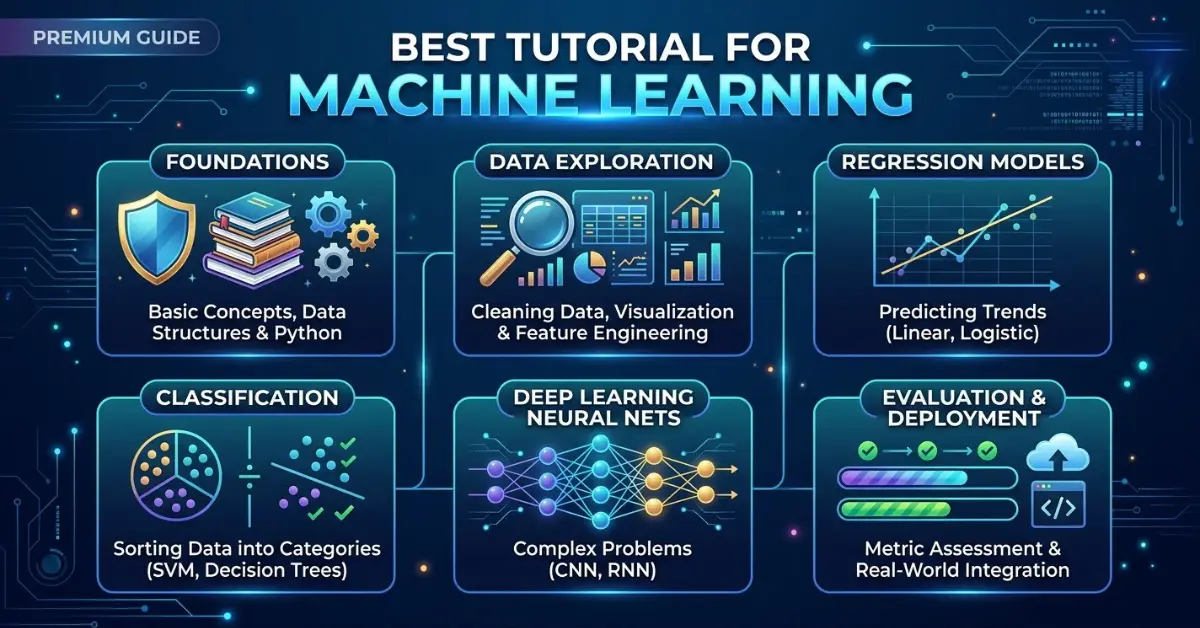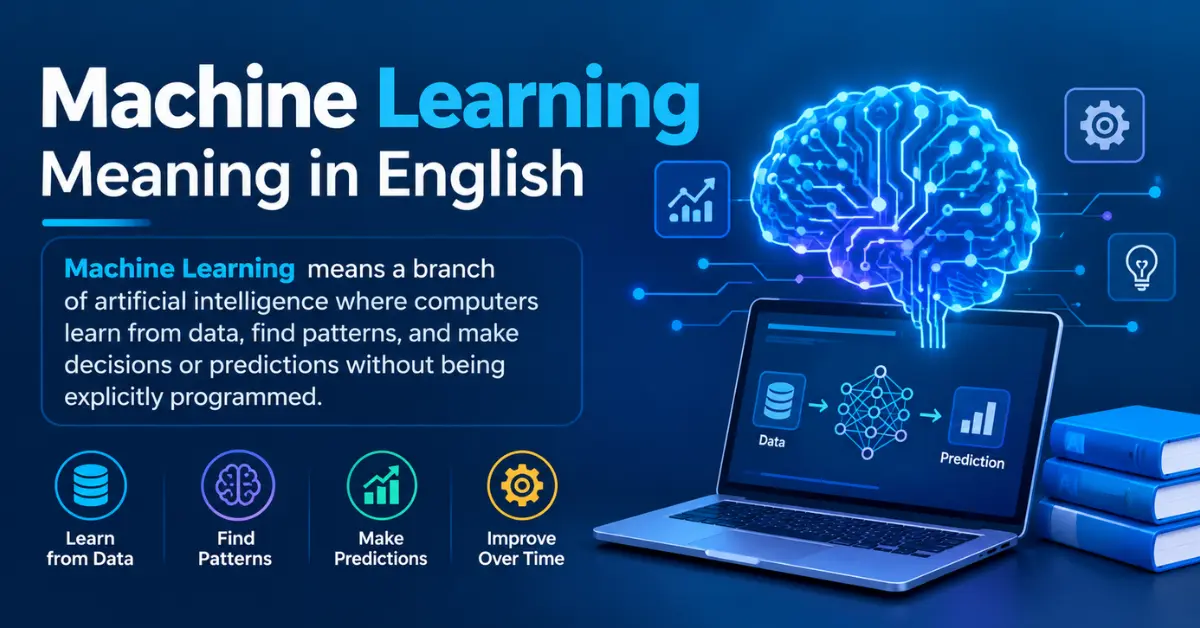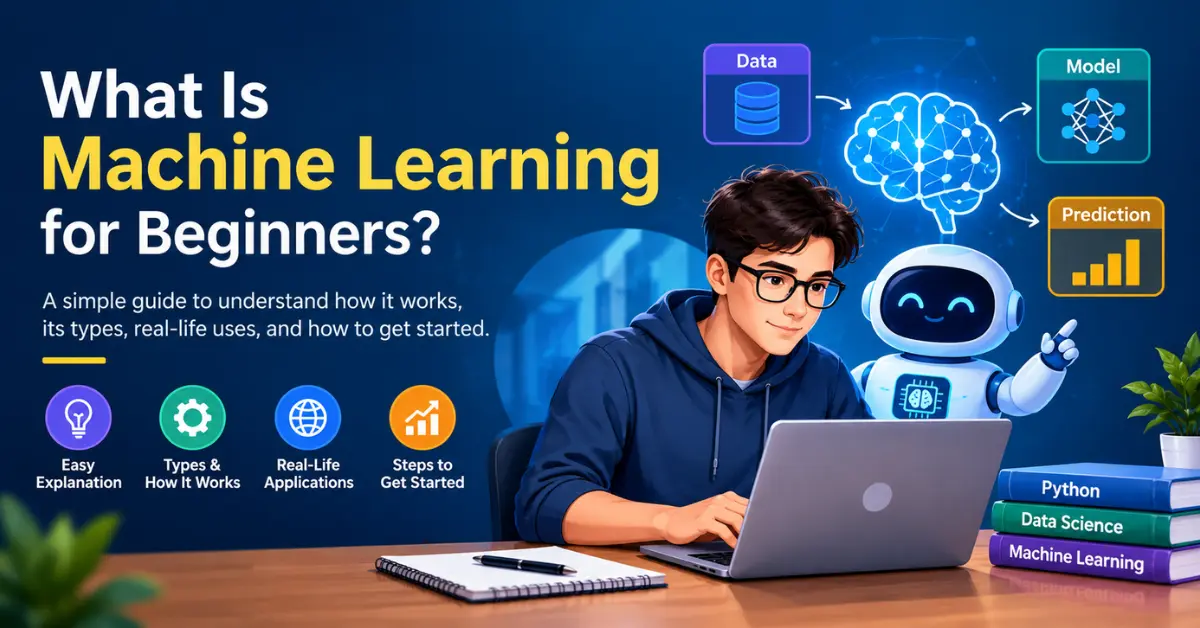
Machine learning is an important part of modern technology that helps computers learn from data and make predictions without being programmed for every task. If you are new to this field, understanding What Is Machine Learning for Beginners, is the first step toward learning how this technology works. From recommending videos on YouTube to filtering spam emails, machine learning is used in many parts of our daily lives. The good news is that you do not need to be a technology expert to get started. You will learn the basics of machine learning, how it works, its main types, real life examples, and simple steps to begin learning it.
How Does Machine learning Work?
Machine learning works by using data to help computers find patterns, learn from examples, and make predictions.
- Collect Data: Gather useful information, such as pictures, numbers, or text.
- Prepare Data: Clean and organize the data so the computer can understand it.
- Train the Model: Let the computer learn patterns from the examples.
- Test the Model: Check how well the model works with new data.
- Make Predictions: Use what the model has learned to predict results or solve problems.
Machine learning improves through data, training, and testing, helping computers make better predictions over time.
Main Types of Machine Learning
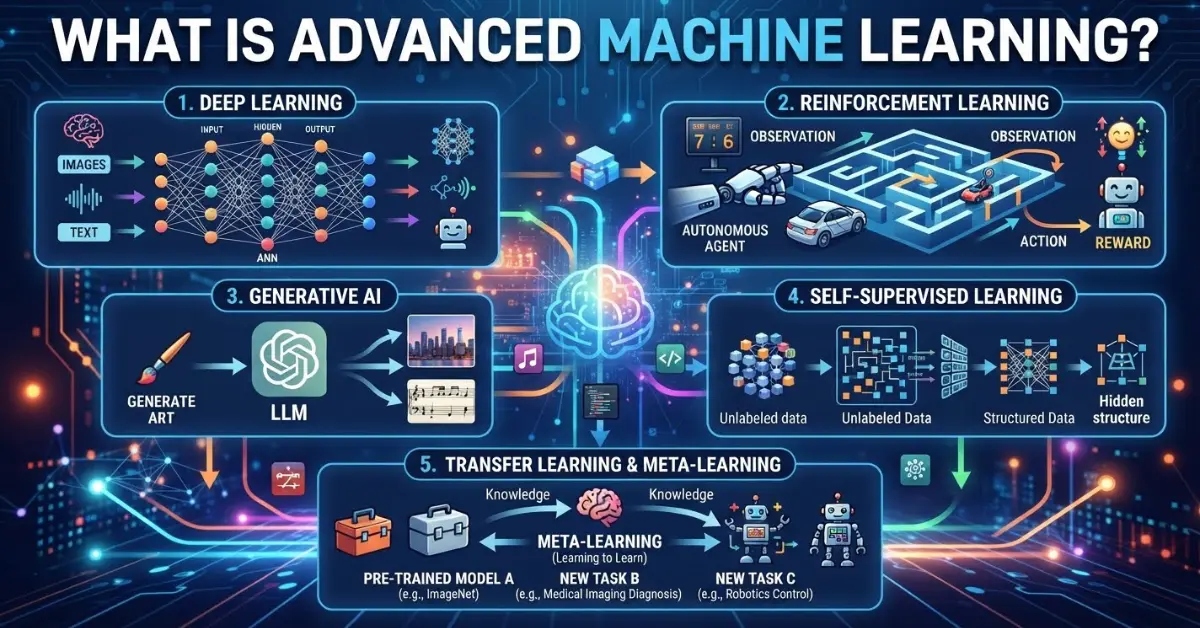
Machine learning has three main types, and each type helps computers learn from data in a different way.
Supervised Learning
Supervised learning is a type of machine learning in which computers learn from labeled data that already has correct answers. It helps computers understand patterns and make predictions based on examples.
How It Works
- Provide Data: The computer receives examples with correct answers.
- Train the Model: It learns patterns from these examples.
- Make Predictions: It uses what it has learned to predict answers for new data.
Example
A computer learns to identify spam emails by studying emails already marked as spam or safe.
Unsupervised Learning
Unsupervised learning is a type of machine learning in which computers find patterns in data without using labeled answers. It helps discover hidden connections and group similar information.
How It Works
- Provide Data: The computer receives data without correct answers or labels.
- Find Patterns: It identifies similarities and differences in the information.
- Group Data: It organizes similar items into groups based on their features.
Example
An online store uses unsupervised learning to group customers with similar shopping habits and interests.
Reinforcement Learning
Reinforcement learning is a type of machine learning in which a computer learns by taking actions and receiving rewards or penalties. It improves its decisions over time by learning from the results of its actions.
How It Works
- Take Action: The computer or system performs an action in a situation.
- Receive Feedback: It gets a reward for a good result or a penalty for an unwanted result.
- Learn and Improve: It uses this feedback to make better decisions in the future.
Example
A computer learns to play a game by trying different moves and receiving rewards when it makes successful moves.
What Do You Need to Learn Machine Learning?
You do not need to be an expert to start learning machine learning. A few basic skills can help you understand its concepts and build simple projects.
- Basic Computer Skills: Learn how to use a computer, manage files, and work with software.
- Basic Mathematics: Understand simple equations, percentages, averages, and graphs.
- Python Programming: Learn basic Python code to work with data and build machine learning models.
- Data Handling: Learn how to collect, organize, and understand information.
- Problem Solving Skills: Practice solving simple problems and thinking step by step.
- Machine Learning Tools: Explore beginner friendly tools such as Google Colab and scikit learn.
By learning these basic skills one step at a time, you can build a strong foundation for machine learning.
Best Beginner Projects to Practice Machine Learning
Working on simple projects is a great way to understand machine learning and practice your skills. Beginners can start with these easy projects:
- Email Spam Detector: Build a model that identifies spam emails by learning from examples.
- Student Marks Prediction: Use study hours and other practice data to predict student marks.
- Flower Classification: Train a model to identify different flowers based on their features.
- Movie Recommendation System: Create a simple system that suggests movies based on user interests.
- House Price Prediction: Use details such as house size and location to estimate house prices.
These beginner friendly projects help you practice Python, understand data, and learn how machine learning models work. Start with one simple project and improve your skills as you gain experience.
Career Opportunities in Machine Learning
Machine learning offers many career opportunities for people who enjoy technology, data, and problem-solving. Beginners can start by learning basic programming and building simple projects.
- Machine Learning Engineer: Builds and improves machine learning models that solve real world problems.
- Data Analyst: Studies data to find useful information and help businesses make decisions.
- Data Scientist: Uses data, statistics, and machine learning to discover patterns and make predictions.
- AI Engineer: Develops intelligent systems that can perform tasks such as understanding language and recognizing images.
- Research Assistant: Helps researchers test new ideas and explore ways to improve machine learning technology.
Machine learning can lead to different career paths. Learning Python, understanding data, and practicing with projects can help beginners prepare for future opportunities.
Common FAQs About What Is Machine Learning for Beginners
Here are Some Faqs of What Is Machine Learning for Beginners:
Can I Learn Machine Learning on My Own?
Yes, you can learn machine learning on your own through online courses, tutorials, books, and practice projects. Start with basic concepts and move to more advanced topics as your skills improve.
Is Machine Learning Used in Mobile Apps?
Yes, many mobile apps use machine learning to recognize faces, improve photos, suggest content, translate languages, and understand voice commands.
What Is a Machine Learning Model?
A machine learning model is a computer system trained on data to find patterns and make predictions or decisions. For example, a model can estimate house prices based on previous housing data.
What Is the Difference Between Training Data and Testing Data?
Training data helps a model learn patterns, while testing data checks how well the model works with information it has not seen before. Using separate data helps measure its performance more fairly.
Can Machine Learning Make Mistakes?
Yes, machine learning models can make mistakes when data is incomplete, incorrect, or biased. Their predictions may also be wrong when they face situations that differ from their training examples.
Is Machine Learning Used in Healthcare?
Yes, healthcare professionals use machine learning tools to help analyze medical images, study health data, and support research. These tools assist professionals but do not replace the need for expert medical judgment.
What Is Overfitting in Machine Learning?
Overfitting happens when a model learns the training examples too closely, including details that do not help it handle new data. As a result, it may perform well on training data but poorly on unfamiliar examples.
How Can I Check Whether a Machine Learning Model Is Good?
You can check a model by testing it on new data and measuring its results. Depending on the task, useful measures include accuracy, precision, recall, and prediction error.
Conclusion
Machine learning is an exciting technology that helps computers learn from data and solve problems in different ways. Understanding what is machine learning for beginners is a great first step toward exploring this growing field. By learning the basic concepts, practicing Python, and working on simple projects, beginners can gradually develop useful skills. You do not need to learn everything at once start with small steps, practice regularly, and learn from your mistakes. With patience and effort, you can build a strong foundation in machine learning and explore new opportunities in technology.